
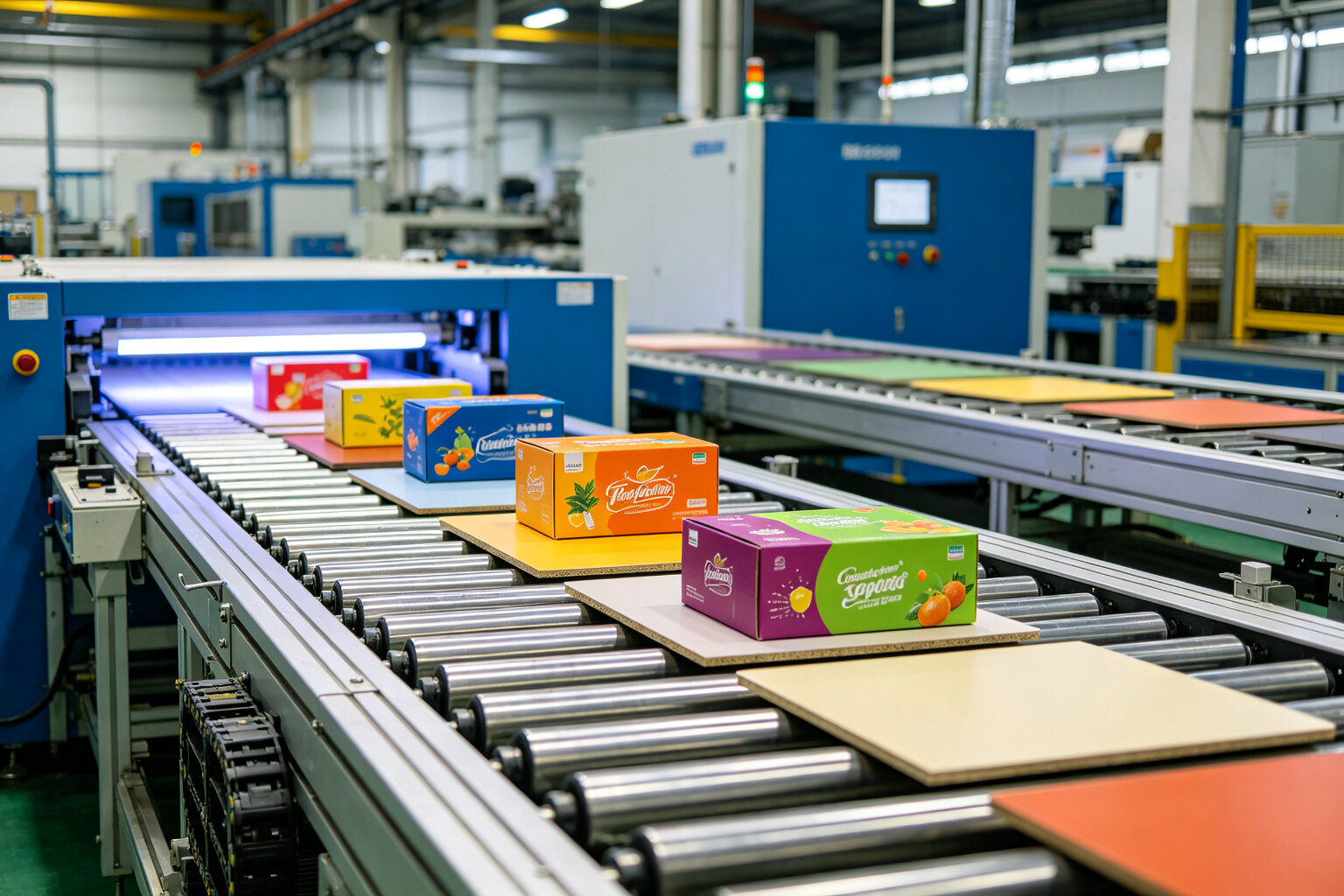
<p>1. Introduction</p><p></p><p>Electron Beam (EB) curing has emerged as a transformative high-energy radiation process in packaging printing and composite manufacturing. Compared to conventional thermal or UV curing, EB curing offers distinct advantages: no photoinitiator residue, deep-through curing at ambient temperature, zero VOC emissions, and exceptional production speed. These benefits make EB curing ideal for applications requiring high safety, environmental compliance, and efficiency—such as food packaging, metal packaging, and advanced composites. In these sectors, colorants are critical components that not only define product appearance but also directly impact curing reactivity, coating performance, and long-term stability. DENSON (Dongguan DENSON Functional Materials Co., Ltd.), a specialized pigment manufacturer, has developed a dedicated series of EB-curable colorants tailored to the unique demands of packaging and composite industries. Rigorously validated for radiation resistance, dispersion stability, and curing compatibility, these colorants are showcased in three detailed application cases: food packaging printing inks, composite prepreg resin systems, and metal packaging coatings. This article provides practical insights for industry professionals.</p><p></p><p>2. Technical Features and Mechanism</p><p></p><p>The core advantage of EB-curable colorants is their ability to maintain pigment stability while achieving excellent curing compatibility under high-energy electron beam radiation. EB curing uses high-energy electron beams (acceleration voltages of 150-300 kV) to bombard coatings, ionizing resin molecules to generate free radicals that initiate chain polymerization of acrylate double bonds. Unlike UV curing, EB curing requires no photoinitiators, eliminating competition between pigments and photoinitiators for UV light absorption. This fundamental difference enables complete deep-through curing even with high pigment loadings and dark colors.</p><p></p><p>DENSON EB colorants utilize radiation-resistant pigments paired with acrylate-functionalized dispersant systems. All pigments undergo electron beam irradiation aging tests at standard doses of 50-100 kGy, ensuring post-irradiation color difference ΔE ≤2.0. The dispersant molecules feature anchoring groups that bind to pigment surfaces, while solvated chains bearing acrylate double bonds participate in free radical polymerization during EB curing, permanently locking dispersants into the crosslinked network. This in-situ fixation prevents pigment migration and floating. Additionally, DENSON EB colorants are optimized for packaging and composite applications, offering low migration, high purity, and broad compatibility across multiple resin systems.</p><p></p><p>3. Application Case Study 1: EB Curing Food Packaging Printing Inks</p><p></p><p>A leading food packaging printer adopted EB offset technology to produce premium food packaging boxes (chocolate boxes, biscuit tins, tea can outer packaging). Requirements included ink free of photoinitiator residue, odorless output, and compliance with food contact material safety standards. Previously, the company faced risks of photoinitiator migration and incomplete curing of dark inks using UV systems. After switching to EB curing, they required specialized compatible colorants.</p><p></p><p>DENSON EB colorants were added at 8%-15% loading (by total ink mass) for four-color offset inks (cyan, magenta, yellow, black) and spot colors. Production parameters included a printing speed of 15,000-20,000 sheets/hour, an EB curing dose of 20-40 kGy, acceleration voltage of 200 kV, and beam current of 30-50 mA. The colorants use pigments compliant with FDA 21 CFR 178.3297 and EU 10/2011 food contact regulations, paired with specially purified acrylate-functionalized polymeric dispersants to ensure migratable substances remain below detection limits.</p><p></p><p>Performance testing confirmed: EB-cured ink curing degree (gel content by solvent extraction) ≥95%, odor-free printed products, and total migration (4% acetic acid, 10 days, 40°C) ≤0.5 mg/dm²—well below the regulatory limit of 10 mg/dm². Ink printability was excellent, with viscosity stability (25°C, No. 4 Zahn cup) maintained at 20-30 seconds without significant drift during press runs. Compared to UV-cured inks, EB-cured ink rub resistance (GB/T 7706) improved by approximately 30%, and lightfastness (xenon arc aging 500 hours) showed color difference ΔE ≤1.5. This case confirms that DENSON EB colorants meet comprehensive requirements for food packaging printing regarding safety, printability, and curing performance.</p><p></p><p>4. Application Case Study 2: EB Curing Composite Prepreg Resin Systems</p><p></p><p>An aerospace composite manufacturer adopted EB curing to produce carbon fiber/glass fiber prepregs for aircraft interiors and sports equipment (skis, bicycle frames). Conventional thermally cured prepregs require prolonged high-temperature/high-pressure curing (120-180°C, 1-4 hours), leading to high energy consumption, long cycles, and potential fiber misalignment due to resin flow. EB-cured prepregs cure rapidly at ambient temperature (seconds to minutes), with controlled resin viscosity changes that help maintain precise fiber alignment.</p><p></p><p>DENSON EB colorants were added at 2%-5% loading for colored prepregs (black, dark gray, dark blue, red). The resin system was an epoxy acrylate/polyurethane acrylate hybrid, with carbon fiber areal weight of 200 g/m² and resin content of 35%-40%. EB curing parameters included a dose of 50-80 kGy, acceleration voltage of 300 kV (ensuring penetration through prepreg thickness), and beam current of 50-100 mA.</p><p></p><p>Key challenges included: preventing colorants from affecting prepreg shelf life (≤10% viscosity change after 6 months storage at -18°C); ensuring pigments do not impede electron beam penetration or curing; and maintaining mechanical properties despite colorant addition. DENSON EB colorants achieved high tinting strength at low loadings while minimizing impact on rheology and curing reactions through precise control of pigment particle size (D50 ≤200 nm) and dispersant dosage.</p><p></p><p>Results showed: after adding DENSON EB colorants, prepreg gel time (120°C) changed by ≤5%, meeting 6-month shelf life requirements. EB-cured composites achieved interlaminar shear strength (ILSS, ASTM D2344) ≥60 MPa and tensile strength (ASTM D3039) ≥1500 MPa (carbon fiber), with degradation ≤3% compared to uncolored controls. Surface color was uniform (ΔE ≤1.0), with no discoloration or delamination after 1000 hours of damp heat aging (85°C/85% RH). This demonstrates that DENSON EB colorants meet stringent mechanical and long-term stability requirements for aerospace-grade composites.</p><p></p><p>5. Application Case Study 3: EB Curing Metal Packaging Coatings</p><p></p><p>A metal packaging producer adopted EB curing for inner and outer coatings on food and beverage cans (aluminum and tinplate), requiring superior corrosion resistance, fabrication durability, and food safety. Traditional thermal curing requires baking at ~200°C for 10-15 minutes, consuming significant energy and risking substrate deformation. EB curing achieves full cure in seconds at ambient temperature, drastically reducing energy use and boosting efficiency.</p><p></p><p>DENSON EB colorants were added at 3%-8% loading for white basecoats, colored topcoats, and light-colored inner markings. The system used a polyester acrylate/epoxy acrylate hybrid, with exterior coating thickness of 8-12 μm and inner coating thickness of 3-5 μm. EB curing parameters included a dose of 30-50 kGy, acceleration voltage of 150-200 kV, and line speed of 300-500 cans/minute.</p><p></p><p>Key requirements included: promoting adhesion to metal substrates; ensuring cured coatings withstand stamping, drawing, and seaming without cracking; and complying with food safety standards with no hazardous migration. DENSON EB colorants use surface-modified pigments and dispersants containing adhesion-promoting groups to enhance bonding at the pigment-resin-metal interface.</p><p></p><p>Testing results showed: EB-cured metal can coating adhesion (cross-cut method, GB/T 9286) Grade 0, impact resistance (50 cm·kg) with no cracking, and bending resistance (T-bend test) ≤2T. Salt spray testing (GB/T 1771, 500 hours) revealed no blistering or rust. Inner coating total migration (4% acetic acid, 10 days, 40°C) ≤0.8 mg/dm², complying with GB 4806.10 food contact standards. Compared to thermal curing, EB curing reduced energy consumption by ~60% and increased efficiency by ~3 times. This case proves DENSON EB colorants deliver high performance, efficiency, and safety in metal packaging coatings.</p><p></p><p>6. Key Selection Parameters and Usage Recommendations</p><p></p><p>When selecting EB-curable colorants for packaging and composites, prioritize these key parameters: First, pigment radiation resistance—require suppliers to provide electron beam irradiation aging data confirming ΔE ≤2.0 at actual operating doses. Second, food contact safety—food packaging and inner coatings must use colorants compliant with FDA, EU 10/2011, or GB 4806 regulations, supported by declarations and test reports. Third, dispersion system reactivity—dispersants must carry acrylate functional groups to participate in polymerization, preventing post-cure migration. Fourth, pigment particle size and distribution—nano-scale pigments (D50 ≤300 nm) are essential for composites and thin coatings to avoid uniformity issues and mechanical degradation. Fifth, viscosity and rheology—select ranges appropriate for the application method (offset, gravure, roller, spray, dip coating). Sixth, curing compatibility—conduct curing tests under actual EB equipment parameters to verify colorants do not compromise curing degree or coating performance.</p><p></p><p>Usage recommendations: For food packaging, prioritize certified colorants and conduct regular migration testing. For composites, perform full compatibility testing (shelf life, gel time, post-cure mechanics). For metal packaging, focus on fabrication resistance and corrosion resistance. Always run small-batch trials before mass production to confirm color, curing, and performance. Regularly calibrate EB equipment output, as beam intensity decays over time. Store colorants away from direct sunlight and heat, and stir thoroughly before use.</p><p></p><p>7. Conclusion</p><p></p><p>EB electron beam curing technology, with its photoinitiator-free formulation, deep-through curing, zero VOC emissions, and high efficiency, holds immense potential in packaging printing and composite manufacturing. DENSON EB-curable colorants successfully address critical challenges—pigment stability, food safety, and curing compatibility—through radiation-resistant pigments, acrylate-functionalized dispersions, and application-specific optimization. Validated across three key scenarios (food packaging inks, composite prepregs, and metal coatings), DENSON EB colorants demonstrate reliable performance and curing compatibility. As EB equipment costs decline and environmental regulations tighten, adoption will accelerate. Enterprises should rigorously evaluate core parameters (radiation resistance, food safety, dispersion reactivity, curing compatibility) against specific application needs and equipment conditions to ensure stable EB curing processes and consistent product quality.</p>